
According to the latest Budget papers, the staff strength of central ministries and departments is estimated to rise by 276,796 to 3.44 million at the end of FY23, it would be up by 109,266 to 3.55 million in March 2024.

'They have started becoming an important player, but not at the same level as they were in the earlier part of the decade.'
'...Market-linked debentures, high-value insurance, exemptions from capital gains by investment in real estate, etc.' 'So, there are a number of measures directed at collecting a fair share from higher income individuals.'

Several global models are predicting El Nio to appear around the second half of the year, which are the crucial rain-bearing months.

Ahead of the 2023-24 Union Budget, the thinking at the top level of the central government is clear: Gross domestic product (GDP) growth of 6-6.5 per cent is a comfortable enough target for FY24 and the focus should be on fiscal consolidation to ensure that the sovereign cost of borrowing does not become prohibitively expensive in a high-interest rate environment, according to people in the know. Those aware of deliberations between the Prime Minister's Office (PMO) and the Ministry of Finance said while the Budget would look to strike a balance between infrastructure investment and welfare schemes, it is unlikely to be populist, though it will be the last full-year Budget before the 2024 Lok Sabha election. Incidentally, 6-6.5 per cent GDP growth is what the upcoming 2022-23 Economic Survey is expected to project for FY24.

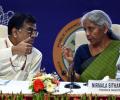
Coming Wednesday, Finance Minister (FM) Nirmala Sitharaman will present the 2023 Union Budget - the last full Budget ahead of the 2024 Lok Sabha elections. While India exited 2022 as a relatively bright spot in the global economy, the FM will endeavour to present a Budget that insulates India's economy against global headwinds and recession in advanced economies, while sticking to the path of fiscal consolidation. In this, she is being helped by her core team of trusted advisors.

'Government's focus should be on the expenditure side in this Budget, not so much on the taxation side.'

It may plan a significant hike in budgetary support aimed at completing the balance 8.4 million dwellings by March 2024.

For fiscal year FY23, the 2022 Union Budget had targeted a capex outlay of Rs 7.5 trillion, which is 35.4 per cent higher than the FY22 Budget Estimate of Rs 5.54 trillion.

Government's focus on infrastructure is the biggest positive for the Indian economy, followed by the improvement in tax collections and good consumption recovery.

'It has been an ongoing process, talking to the relevant ministries about eliminating leakages and curbing non-core expenditure in various schemes.'

As a percentage contributor to nominal GDP, PFCE's share was 60.1 per cent in FY23, compared with 59.6 per cent and 60.8 per cent in the two preceding fiscal years. "Although PFCE is expected to grow 7.7 per cent in FY23, we believe it is still short of a broad-based recovery. "The current consumption demand is highly skewed in favour of goods and services consumed largely by the households falling in the upper income bracket. "A broad-based consumption recovery, therefore, is still some distance away," said Sunil Kumar Sinha, principal economist with India Ratings.
In November, the fiscal deficit widened by Rs 2.2 trillion, the highest ever in any month this financial year.

Of $90 billion remittances that India is expected to receive in 2022, only $27.4 billion has come in the first half of the year.

The importance of China as India's top trading partner cannot be understated.
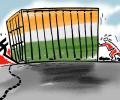
India has been relatively insulated from the severe headwinds in the West. However, with a third of the global economy expected to slip into recession in calendar year 2023, the impact will strongly be felt on India's exports and trade economy, leading economists said in a panel discussion at the Business Standard BFSI Insight Summit in Mumbai on Wednesday. The panel comprised former Reserve Bank of India executive director and former Monetary Policy Committee member Mridul Saggar, State Bank of India Chief Economic Advisor Soumya Kanti Ghosh, Citibank India Chief Economist Samiran Chakraborty, ICRA Chief Economist Aditi Nayar, and IndusInd Bank Chief Economist Gaurav Kapoor. The topic of the panel discussion was No recession in sight: Is India decoupled from developed economies?

Ahead of the Union Budget for 2023-24, Budget makers have welcomed the global consensus view that India will remain one of the bright spots in calendar year 2023. But there is some alarm over the grim global situation and how that might impact the Centre's projections and assessments for next financial year. The big global headwinds include a deep and sustained recession in the West, including India's biggest trading partners in North America and Europe, continuing volatility in commodity markets, and renewed Covid-19 fears, as lifting of strict curbs by China could potentially lead to a massive spread again.

The department of commerce has urged the agriculture ministry as well as the diplomatic mission in Tehran to apprise it of details as to why Iranian buyers have stopped import of rice and tea from India, a senior government official said. Exporters said that exports of items such as high quality tea and rice have stopped since last week. As of now, there has been no confirmation from the authorities and the response from the embassy in Tehran is also taking time, they said.

Shipments of sunflower oil to India have started normalising after imports from war-torn Ukraine resumed beginning September after a gap of four months, leading to further normalisation of supplies. Ukraine has been the largest supplier of sunflower oil to India. However, after the Russia-Ukraine war broke out in February, supplies from Ukraine dwindled as Russia denied it access to the Black Sea ports.

Brace for some warmth this winter as the India Meteorological Department (IMD) in its December-February forecast on Thursday said that the minimum and maximum temperatures could remain 'normal' to 'above normal' over most parts of Northwest and Northeast India. Both the minimum and maximum will remain below normal in Southern Peninsular and Central India in these winter months. While this could give some respite from the intense cold of North India, it could have a negative impact on the standing rabi crops if the temperature rise is unusual and abnormal.
 © 2026 Rediff.com - Advertise with us - Disclaimer - Privacy Policy - Sitemap - Feedback - About us - Terms of use - Grievances